To create real operational impact, AI must understand the business well enough to act inside it.
Most companies already have AI access. What they often do not have is a structured model of how the business actually works across CRM, finance, documents, and operations. Without that model, AI can summarize and automate fragments, but it cannot reliably create operational impact.
The missing layer is the ontology: the business-native model of items, relationships, actions, and policies that lets AI move from generic capability to governed action.
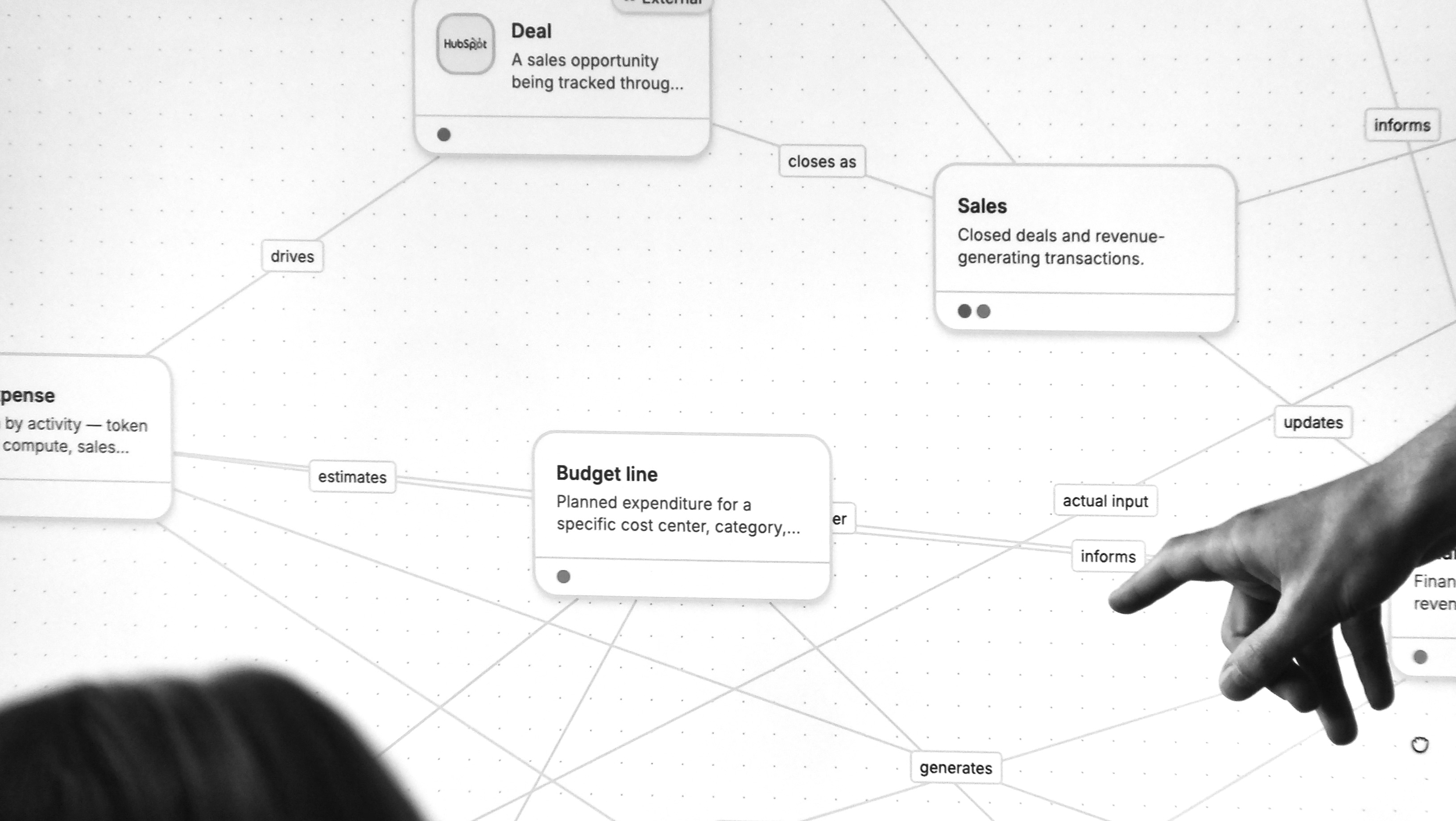
QuickThought / Ontology View
Ontology as operational model
1. Problem Definition
The Problem
Companies already have software everywhere. CRM, finance tools, inboxes, spreadsheets, project systems, and documents each hold part of the truth. The issue is not missing systems. It is missing operational meaning between them.
AI therefore sees fields and events, not the business itself. That is why many initiatives stay limited to chat, copilots, isolated automations, and brittle workflow chains. They can touch data, but they do not reliably understand what that data means for the company.
What companies often call an AI problem is usually a structure problem first.
2. Missing Layer
The Missing Layer
The ontology is the digital twin of how the business works. It defines what exists, how it relates, which actions are meaningful, and which policies govern those actions.
Once the ontology exists, a deal from HubSpot is no longer just CRM data. It becomes a business item connected to sales, forecast assumptions, approvals, and downstream operational decisions.
- Items
- Relationships
- Actions
- Policies
3. Operating Model
Three States of Operational AI
The operational AI problem can be understood as three different states. Only the third creates durable business value.
| State | What you get | What is missing |
|---|---|---|
| Ontology without action | Structured understanding You can model the business, see items and relationships, and reason about structure. | No operational impact Nothing happens. On its own, the model ages quickly because operational reality keeps moving underneath it. |
| Action without ontology | Activity Workflow automation tools can move data, trigger tasks, and make things happen. | No trustworthy business model The action is not grounded in a business-native ontology. Logic scatters, governance weakens, and correctness becomes harder to trust. |
| Ontology plus action | Structured action The business is modeled, the policies are explicit, and action becomes governed, visible, and operationally meaningful. | The target state This is where QuickThought and elbOS come together: one flow from conceptual understanding to operational impact. |
4. Illustrative Workflow
Example: From CRM Signal to Governed Forecast Update
A change in stage, value, or close date in the CRM becomes meaningful through the ontology: the deal is linked to sales, revenue expectations, budget assumptions, and downstream planning. Policies then determine whether the change updates automatically or requires review. elbOS executes the permitted action and keeps the decision path visible for finance and operations.
- CRM signal Stage, value, or close date changes.
- Business meaning The ontology links the deal to revenue and planning.
- Policy gate Rules decide what can happen automatically.
- Governed action elbOS updates the forecast with the right controls.
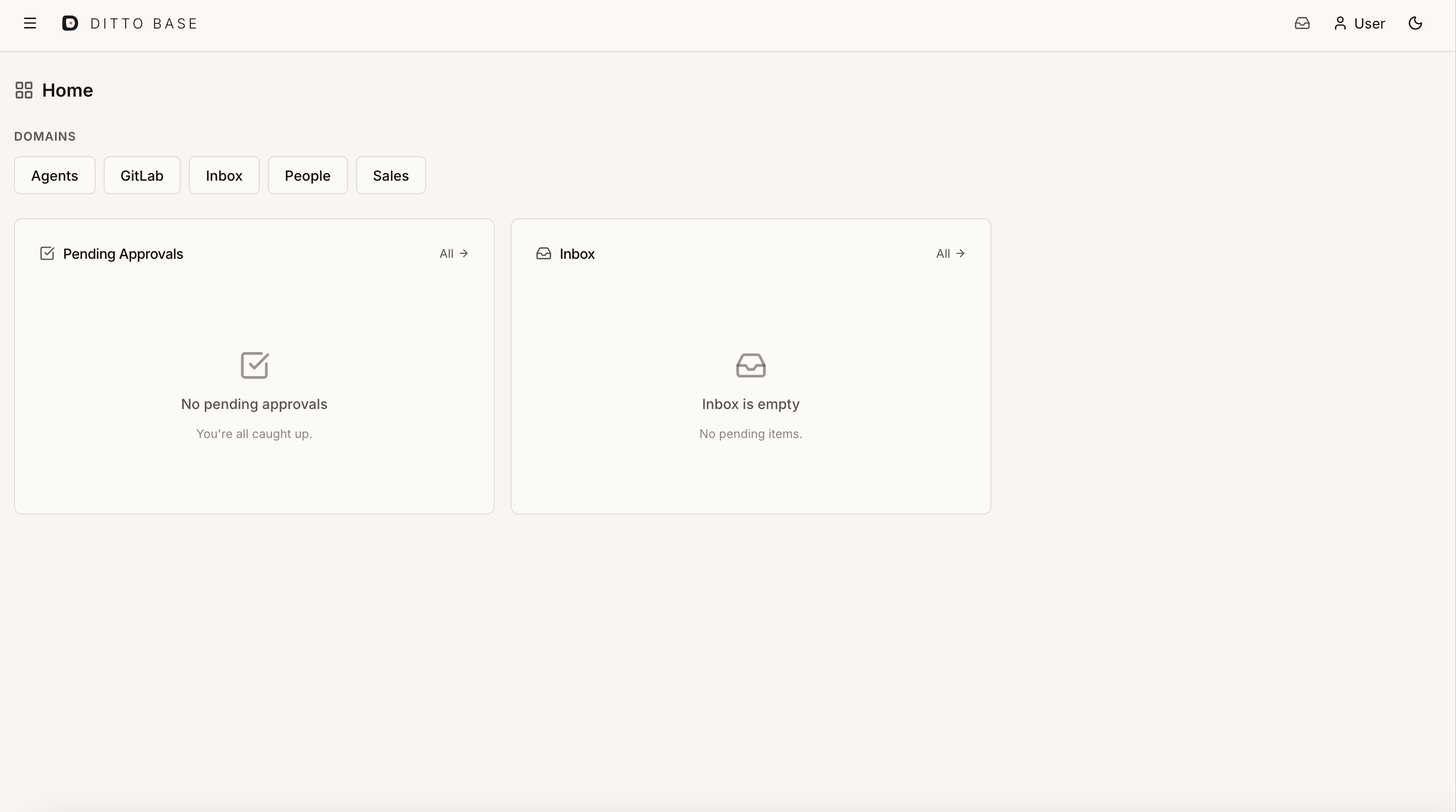
Runtime View
Structured action needs an operational surface
5. Delivery Model
How elbtech Brings This Together
QuickThought
The ontology-building environment behind the modeling work. It makes the business legible through items, relationships, actions, and policies.
elbOS
The action layer that turns that ontology into governed operations: workflows, approvals, visible state, and durable action on top of the model.
Discussion
Talk to us about structured action
If you want AI to create operational impact in your business, the first question is not which model you use. The first question is whether your business is modeled well enough for AI to act inside it.
moin@elbtech.dev